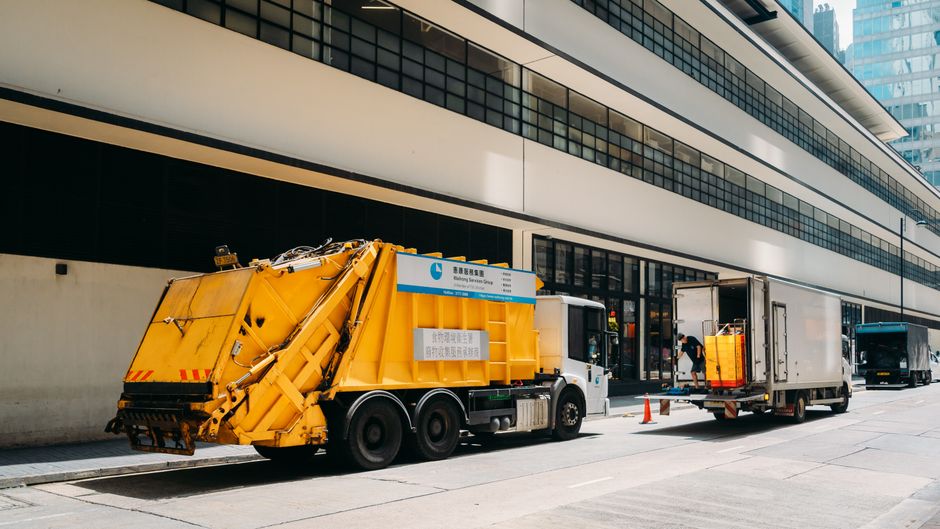
Does your clearance need a waste carrier licence in London?

If you are arranging a house empty, a flat clearance, or a load of mixed rubbish in London, the licence question comes up fast: does your clearance need a waste carrier licence in London? It sounds simple, but the answer depends on who is removing the waste, how it is being moved, and whether it belongs to you or your business. Get it wrong and you can end up with a messy compliance issue, not just a messy property. Let's make it clear, practical, and actually useful.
This guide explains when a waste carrier licence matters, how clearance jobs are usually handled, what good practice looks like in London, and the mistakes people make when they assume "someone else will sort it." Truth be told, that assumption is where a lot of trouble starts.
Why Does your clearance need a waste carrier licence in London? Matters
London is a city where waste moves fast and scrutiny is high. That is not dramatic, just real life. Councils, landlords, managing agents, and commercial tenants all have a stake in making sure waste is removed properly, traceably, and without fly-tipping risk. If a clearance company is not properly registered to carry waste, the problem does not disappear because the van left the street.
For householders, the main concern is simple: if you pay someone to remove items from your property, you want confidence they are allowed to transport that waste and dispose of it legally. For businesses, the stakes are often higher because there may be extra duty-of-care expectations, records to keep, and reputational damage if waste ends up dumped by the roadside near a railway arch, estate, or quieter side street. You know the sort of scene: a van gone, bags left behind, and everyone suddenly pointing fingers. Not ideal.
The licence question matters because waste transfer is regulated. In plain English, if somebody takes away waste as part of a clearance service, they may need to be registered as a waste carrier. Without that, the person producing the waste can still be left explaining what happened. That is why a careful check before booking is worth its weight in sanity.
Practical takeaway: if you are hiring a clearance provider in London, do not just ask what they will remove. Ask whether they are properly registered to carry, transport, and dispose of the waste they collect.
How Does your clearance need a waste carrier licence in London? Works
The phrase "waste carrier licence" is widely used, although in the UK it is more accurate to talk about waste carrier registration. In practice, people still search for "licence," so the meaning is usually the same for everyday use: can the person or company legally transport waste from one place to another?
Here is the basic idea. If a clearance service collects unwanted items, rubble, furniture, white goods, garden waste, office rubbish, or mixed junk and moves it away for disposal or recycling, that service may need to be registered as a waste carrier. In a typical London clearance job, that could involve:
- loading waste from a flat, house, office, shop, or site
- taking it to an approved facility or transfer station
- sorting items for recycling, reuse, or disposal
- keeping records that show where the waste went
The important detail is who is carrying the waste and in what context. If you are simply moving your own small amount of household rubbish in your own vehicle to an appropriate disposal point, that is a very different situation from operating a business that collects waste for others. A good clearance provider should be able to explain that difference without sounding cagey. If they dodge the question, that tells you something.
In London, this matters even more because many clearances happen in flats, terraces, shared driveways, parking-restricted streets, and busy commercial areas. The logistics can be awkward, and awkward logistics are exactly where poor operators cut corners. A compliant team should be comfortable explaining how they handle loading, transport, documentation, and disposal. If they are vague, keep your wallet in your pocket for a moment.
Key Benefits and Practical Advantages
Checking the licence side of a clearance is not just about ticking a legal box. It has real practical benefits.
1. Less risk of fly-tipping problems
Using a registered operator lowers the chance that your waste ends up dumped somewhere it should not be. That sounds obvious, but it is the core issue. Once waste is in a van, you want a proper destination, not a mystery route through east London at 10 p.m.
2. Better traceability
A proper operator should be able to show where the waste went. That helps if a landlord, managing agent, or business compliance team asks for reassurance later.
3. Stronger trust during clearance jobs
When a company knows what it is doing, the job often runs more smoothly. Items are separated better, access is managed more carefully, and the team is less likely to improvise in a way that creates damage or delay.
4. More appropriate handling of reusable and recyclable items
Not everything should be treated as rubbish. A good clearance service may sort furniture, metals, white goods, and other items for recycling or reuse where possible. That can reduce waste and sometimes improve value for the customer.
5. Easier decision-making
Once you know what a legitimate clearance looks like, it becomes easier to compare quotes properly. You stop comparing apples with, well, half-broken bins.
| Area of concern | Compliant clearance | Poor-quality clearance |
|---|---|---|
| Waste transport | Handled by a registered carrier where needed | Vague or undocumented |
| Disposal trail | Clear destination and process | Unclear, hard to verify |
| Customer risk | Lower risk of problems later | Higher risk of complaints or enforcement issues |
| Job quality | More organised and predictable | Often rushed or improvised |
If you are comparing options, look at service pages such as rubbish removal, waste removal, and property clearance to understand the scope of what a proper clearance provider should cover.
Who This Is For and When It Makes Sense
Not every situation needs the same level of attention, but plenty of people in London should care about waste carrier status. This is especially relevant if you are:
- a homeowner clearing a house after a move, renovation, or bereavement
- a landlord clearing a rental property between tenancies
- a managing agent or freeholder arranging common-area clearance
- a business owner getting rid of office furniture, archive waste, or surplus stock
- a builder or tradesperson dealing with construction offcuts and demolition debris
- someone clearing a garage, loft, basement, or garden full of mixed waste
It also matters when the waste is awkward. Sofas, mattresses, fridges, white goods, and builders' rubble are the sort of items that create real handling and disposal questions. A single item might seem harmless, but once it is loaded into a van and driven away, the legal and practical responsibilities do not vanish.
For households, the issue often comes up during a one-off clearance. For businesses, it is more ongoing. Waste streams can be regular, and commercial operators are usually expected to be more disciplined about transfer notes, recycling routes, and contractor checks. If you run a shop near a busy high street or an office in central London, you really do want the paperwork side to be boring. Boring is good here.
It may also make sense to pay attention if you are using a general clearance service for specific item types like furniture clearance, mattress disposal, fridge disposal, or bed disposal. Those items are common, but they still need proper handling.
Step-by-Step Guidance
If you are trying to decide whether your clearance in London needs a waste carrier licence, follow this process. It is simple enough, although the details matter.
- Identify the waste type. Is it household junk, office waste, garden cuttings, builders' materials, or a mix? The more varied the load, the more important proper handling becomes.
- Work out who is transporting it. If you are hiring someone, ask who will move the waste and under what registration.
- Check whether the waste is from your own premises or from a service you provide. A business transporting waste for others usually faces a different compliance picture from someone moving their own unwanted items.
- Ask for proof of registration if relevant. A credible operator should not react badly to that question. If they do, that is not reassuring.
- Ask what happens to the waste after collection. Recycling, reuse, and disposal routes should be explained plainly.
- Get written detail where possible. Quote, scope, and collection terms should all be clear.
- Keep a record. If this is a business or landlord clearance, keep the job details and any paperwork safely.
That is the practical version. No drama, no mystery. Just ask the questions before the van arrives.
A small real-world example helps. Say you are clearing an office in Westminster and there are desks, chairs, monitors, and boxed archive waste. You are not just "getting rid of stuff." You are arranging transport of controlled waste from a commercial site. A competent contractor should be able to talk through the vehicle used, sorting process, and destination without flapping. If they cannot, I would pause there.
Expert Tips for Better Results
In our experience, the smoother clearances are the ones where the customer slows down for ten minutes before booking. That tiny pause can save a lot of stress later.
Ask two direct questions:
- Are you registered to carry waste where required?
- Where does the waste go after collection?
Those two questions alone tell you a lot. Not everything, but a lot.
Separate items before the team arrives if you can. Mixed loads are harder to check, harder to recycle, and more likely to be charged at a higher level. Even a basic split between furniture, electrical items, cardboard, and general rubbish can help.
Be honest about the volume. A lorry load and a few bin bags are very different jobs. If you underdescribe the job, the quote may change on arrival, which nobody enjoys at 8.15 on a rainy Tuesday morning.
Check access details. London access matters: basements, lifts, narrow stairs, controlled parking zones, and shared entrances all affect how a clearance is performed. Clear access information helps with timing and pricing.
Think about reuse before disposal. Some items may be suitable for reuse or recycling. A capable clearance provider will often separate salvageable items, not just throw everything into one pile. That is especially useful for furniture, office equipment, and white goods.
Use a specialist for specialist loads. A standard rubbish collection is not always the right answer for every clearance. For example, builders' waste, office strip-outs, and probate-related clearances each need slightly different handling. Matching the job to the service usually makes the result better.
For a broader overview of service types, you may also find builders waste clearance, office clearance, and probate clearance helpful to compare.
Common Mistakes to Avoid
Most problems here come from assumptions. People assume a contractor is compliant because the website looks tidy. Or they assume a cheap price means the licensing side must be fine. It does not always work like that.
- Assuming every waste collector is registered. They are not. Some are, some are not. Ask.
- Not checking what is actually being removed. Mixed waste, electricals, and construction debris can change the picture.
- Leaving the paperwork to chance. If you are a landlord or business, keep records. Future-you will be grateful.
- Choosing only by price. Cheap can be fine. Cheap and vague is not.
- Using "man and van" loosely. A van alone is not proof of legal waste carrying.
- Forgetting about access and parking constraints. In London, that can derail a job fast.
A quieter mistake is failing to match the service to the job. A pile of garden waste is not the same as an office clearance, and neither is the same as a full house clearance. They may all look like "rubbish" to the untrained eye, but operationally they are different. A lot different, actually.
Tools, Resources and Recommendations
You do not need specialist software to make a sensible choice, but a few practical tools and habits help:
- A simple job checklist so you know what is being removed
- Photos of the waste before collection, especially for larger jobs
- Measurement notes for bulky items like sofas, wardrobes, and fridges
- Written quotes so scope and price are not misunderstood
- Basic records if this is a business, landlord, or probate clearance
If the clearance involves bulkier household waste, compare options such as bulk waste collection, bulky waste collection, and large item collection. For domestic clearances, house clearance and home clearance are useful reference points.
For business and mixed commercial loads, look at business waste removal, commercial waste collection, and commercial waste disposal. The names sound similar, I know, but the operational detail matters.
Law, Compliance, Standards, or Best Practice
Let's keep this careful and plain. In the UK, waste transport and disposal are regulated, and waste carriers are generally expected to be properly registered where required. There are also duties around how waste is handled, transferred, and documented, especially for business-related waste.
For everyday customers in London, the safest practical approach is:
- use a provider that can explain its registration status clearly
- make sure the waste destination is legitimate and appropriate
- keep records where the job is commercial, landlord-related, or otherwise sensitive
- do not knowingly hand waste to an operator who seems unregistered or evasive
Best practice also means separating recyclables where possible and avoiding contamination of loads. A mattress mixed into a load of wood, cardboard, and soil may complicate sorting. A fridge is different again because white goods often need specific handling. Small decisions during loading can make a big difference later.
If your job involves sustainability goals or tenant standards, it is worth looking at recycling and sustainability, plus the company's own policies such as health and safety policy and insurance and safety. Those pages do not replace your own checks, but they give a useful sense of how seriously a provider takes the work.
Options, Methods, or Comparison Table
There are usually a few ways to handle clearance waste in London. The best choice depends on volume, urgency, item type, and whether you want help loading and sorting.
| Option | Best for | Pros | Watch out for |
|---|---|---|---|
| DIY disposal | Very small amounts of your own waste | Can be cheap if done carefully | Time, transport, disposal rules, heavy lifting |
| Council collection | Selected bulky items or standard routes | Useful for specific items and set processes | Availability, item limits, timing, booking constraints |
| Registered clearance service | Mixed loads, bulky waste, full clearances | Convenient, faster, more flexible | Quality varies, so check registration and scope |
| Specialist commercial clearance | Offices, shops, landlords, larger sites | Better suited to compliance and volume | Requires more accurate planning and records |
For some readers, council routes make sense. For others, especially where items are bulky or there is a deadline, a registered clearance service is simply easier. If you are comparing against local authority options, pages like council large item collection, council rubbish collection, and council waste collection can help frame the difference.
Case Study or Real-World Example
Here is a typical London scenario. A landlord in south-west London needs a flat cleared after a tenant moves out. The property has a sofa, a broken wardrobe, kitchen bits, bags of mixed rubbish, and a fridge that no longer works. The stairwell is narrow, parking is tight, and the block has neighbours who will not thank anyone for making a noisy all-day affair of it.
The landlord speaks to two clearance providers. One gives a vague "we'll sort it" answer and quotes quickly without asking what is inside the flat. The other asks about access, item types, whether there are any electricals, and where the waste should be sorted. The second provider also explains that the load will be handled in line with waste carrier requirements and that reusable items will be separated where practical.
That second approach usually wins for a reason. It shows the job has been thought through. It also means fewer surprises at the kerbside, fewer awkward payment conversations, and less anxiety about where the load ends up. Not fancy. Just better.
This is the sort of job where a service like flat clearance or house clearances makes sense, especially when access and sorting matter. For bigger family situations or estate work, probate house clearance can be the more appropriate fit.
Practical Checklist
Before you book a clearance in London, run through this list.
- Have I identified exactly what needs removing?
- Do I know whether the items are household, commercial, or mixed waste?
- Have I asked whether the company is registered to carry waste where required?
- Have I asked where the waste will go?
- Have I checked whether the provider handles recycling or reuse?
- Do I know if the job includes loading, lifting, and stairs?
- Have I given accurate access and parking information?
- Have I got a written quote or clear booking summary?
- Do I need records for a landlord, business, or probate file?
- Am I comparing like-for-like services rather than just prices?
If you can tick most of those off, you are in much better shape. And if you cannot, that is fine too. It just means you need a bit more detail before pressing go.
Conclusion
So, does your clearance need a waste carrier licence in London? In many real-world cases, yes - or at least the person moving the waste on your behalf needs to be properly registered where the law requires it. That is especially true for house clearances, office clearances, bulky items, builders' waste, and mixed rubbish jobs where transport and disposal are part of the service.
The safest approach is straightforward: check who is carrying the waste, ask where it is going, and choose a provider that can explain the process clearly without bluster. That one habit removes a lot of risk. It also helps you get a cleaner, smoother result, which is what you wanted in the first place.
Get a free quote today and see how much you can save.
When the job is handled properly, the whole thing feels lighter. Less stress, fewer unknowns, and one less thing hanging over the week. That is worth a lot, really.
Frequently Asked Questions
Do all clearance companies in London need a waste carrier licence?
Not every activity is the same, but if a company is transporting waste as part of a clearance service, it generally needs to be appropriately registered where required. A serious operator should be able to explain this clearly.
What is the difference between a waste carrier licence and waste carrier registration?
People often say "licence," but the UK system is more commonly described as registration for waste carriers. In everyday conversation the terms are often used loosely, so the important point is whether the operator is properly authorised.
How do I know if my clearance contractor is registered?
Ask them directly and expect a straight answer. A trustworthy provider should not be defensive about it. If they seem evasive, that is a red flag worth taking seriously.
Does a house clearance need a waste carrier licence in London?
Usually the issue is not the house itself but the transportation of waste from the property. If the provider is moving waste away as part of the service, they may need registration. That is why it matters to check before booking.
Do I need a licence if I am only moving my own rubbish?
For very small-scale disposal of your own waste, the situation can be different from a commercial clearance service. But if you are hiring someone to take waste away, the transport side is the part that usually triggers the registration question.
What happens if waste is dumped illegally after my clearance?
That can create serious problems. The producer of the waste may still be expected to show that they used a proper operator and took reasonable steps. This is one reason paperwork and contractor checks matter.
Is a cheap man-and-van service safe to use?
Sometimes yes, sometimes no. The vehicle description alone does not tell you whether the operator is properly registered or competent. Ask questions, check the scope, and do not rely on price as the only sign of quality.
Do businesses have stricter waste obligations than households?
Often yes, in practice. Commercial waste usually brings more attention to records, transfer details, and contractor due diligence. If you are a business, it is sensible to be more formal about checks and documentation.
Can a clearance service recycle furniture and appliances?
Many can, provided the items are suitable and the provider has the right process. Furniture, white goods, and some electrical items may be separated for reuse or recycling rather than treated as general rubbish.
Should I ask for proof of insurance as well as waste registration?
Yes, that is a smart move. Waste registration and insurance are not the same thing. You want both: legal transport credentials and a sensible level of protection for the job.
Is council collection better than hiring a clearance company?
It depends on what you need removed and how quickly. Council collection can work well for certain items, but a clearance company is often more flexible for mixed loads, heavier items, or time-sensitive jobs.
What if I am arranging a clearance for a flat or probate property?
Those jobs often benefit from a more structured service because there may be access issues, family sensitivities, or records to keep. A specialist flat or probate clearance is usually the calmer route.
What should be included in a proper clearance quote?
A good quote should clearly state the type of waste, the scope of collection, access assumptions, and any extra charges that might apply. If a quote feels too brief to be real, ask for more detail before agreeing.